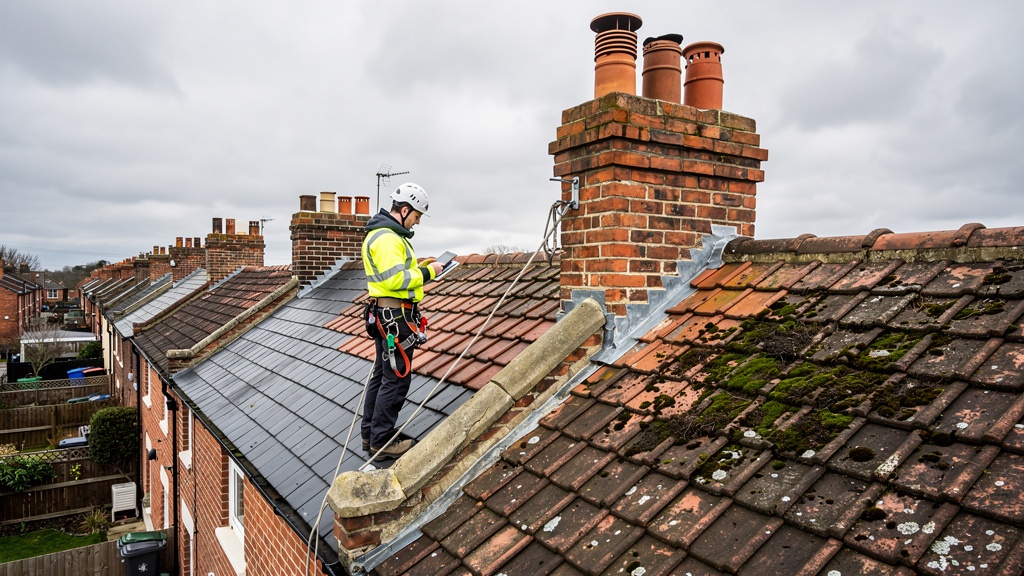
The roof is arguably the single most important part of any property — and the most expensive to repair or replace. Yet it's also one of the elements that buyers most commonly overlook, particularly in the excitement of a viewing. As a surveyor across Wolverhampton for over a decade, I've seen some seriously costly roofing surprises unfold post-purchase. This guide tells you exactly what we check — and why it matters.
In This Article
External Roof Inspection: Tiles, Slates & Ridge
The external roof covering is the first thing I assess when I arrive at a property. Using binoculars from ground level (and where safe, from within a roof void), I look for:
- Missing, broken, or slipped tiles/slates: Even one or two missing tiles can allow water ingress that causes significant internal damage.
- Mortar fillet condition: The mortar along the ridge and hip tiles can degrade over time, allowing tiles to slip. Re-mortaring is relatively inexpensive but should be factored into maintenance planning.
- General condition and age: A roof that's approaching end of life (typically 50–80 years for concrete tiles, 80–100+ for natural slate) may need full replacement in the medium term.
- Evidence of repairs: A patchwork of different tile types can indicate previous repairs — sometimes done well, sometimes not.
For Victorian terraces in areas like Whitmore Reans and Heath Town, I often find original blue clay tiles that are still performing well after over a century. Conversely, some of the more modern concrete tile roofs installed in the 1970s and 1980s are now approaching end of life.
Chimney Stacks & Lead Flashings
Chimney stacks are one of the most common sources of defects in Wolverhampton's older properties. They project above the roofline, exposed to wind, rain, frost and thermal movement — and they deteriorate accordingly. I check:
- Pointing: The mortar joints between the brickwork often erode over time, allowing water to penetrate the stack.
- Flaunching: The mortar bed at the top of the stack, which holds the chimney pot. Cracked or loose flaunching is very common on older Wolverhampton properties.
- Lead flashings: The lead strips that seal the junction between the chimney and the roof covering. Poorly fitted or deteriorated flashings are a frequent cause of water ingress.
- Structural stability: In rare cases, severe neglect can lead to chimney stacks becoming structurally unstable — a serious safety concern.
Case study: During a Level 3 survey on a 1900s terraced house in Bilston, I spotted deteriorated lead flashing around the rear chimney stack that had been allowing water ingress for several years. Inside the roof void, I found significant rot to the rafters in that area. Total repair estimate: £4,500. The buyer used this to negotiate a £5,000 price reduction.
Gutters, Downpipes & Rainwater Goods
Gutters and downpipes might seem minor, but they're responsible for safely directing thousands of litres of rainwater away from the building's structure every year. When they fail, the consequences can be serious. I look for:
- Blocked, cracked, or sagging gutters
- Loose or missing downpipe brackets
- Downpipes that discharge directly onto the ground rather than into a drain
- Cast iron guttering (common on older Wolverhampton terraces) showing signs of rust or split joints
- Evidence of overflowing — staining on external walls below the gutterline
Flat Roof Extensions
Flat roof extensions are incredibly common on Wolverhampton's terraced and semi-detached housing — and they're one of the single most common defect findings in our surveys. A flat roof has a finite lifespan (typically 15–25 years for built-up felt, 20–30+ years for modern GRP/fibreglass) and requires periodic maintenance.
I check the condition of the covering, the drains, any upstands and flashings, and look for evidence of ponding water (which can indicate a drainage problem or structural deflection). I also check internally for any signs of water ingress from flat roof areas.
Internal Roof Void Inspection
Where it's safe and accessible, I enter the roof void as part of a Level 3 Building Survey. This is where I can really see the structural condition of the roof — the state of the rafters, joists, purlins, and any secondary steelwork. I look for:
- Rot or insect attack in timber roof members
- Inadequate or missing thermal insulation
- Evidence of water ingress — staining, wet patches, daylight through the covering
- Structural modifications that may have weakened the roof structure
Good to know: In a Level 2 HomeBuyer Report, I will inspect the roof void if it's safely accessible. In a Level 3 Building Survey, this is a standard part of the inspection. If access isn't possible, I'll note this clearly in the report and recommend a further inspection where warranted.
Most Common Roof Problems in Wolverhampton Properties
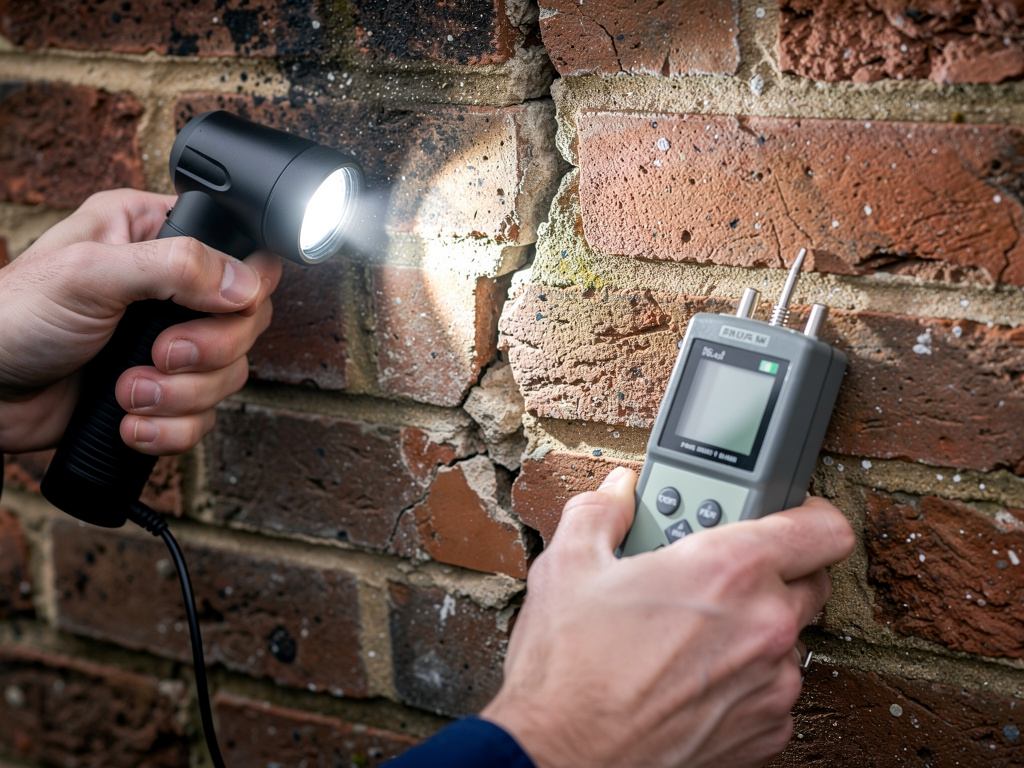
Based on our surveys across Wolverhampton properties, here are the roof issues we see most frequently:
- Deteriorated flat roof coverings — particularly on rear extensions
- Blocked or defective gutters — causing staining and potential penetrating damp
- Deteriorated chimney flashings and pointing — common on Victorian and Edwardian properties
- Slipped or missing roof tiles — particularly on older concrete tile roofs
- Insufficient loft insulation — leading to heat loss and condensation problems
None of these are necessarily deal-breakers — but knowing about them before you buy means you can budget appropriately and negotiate effectively.