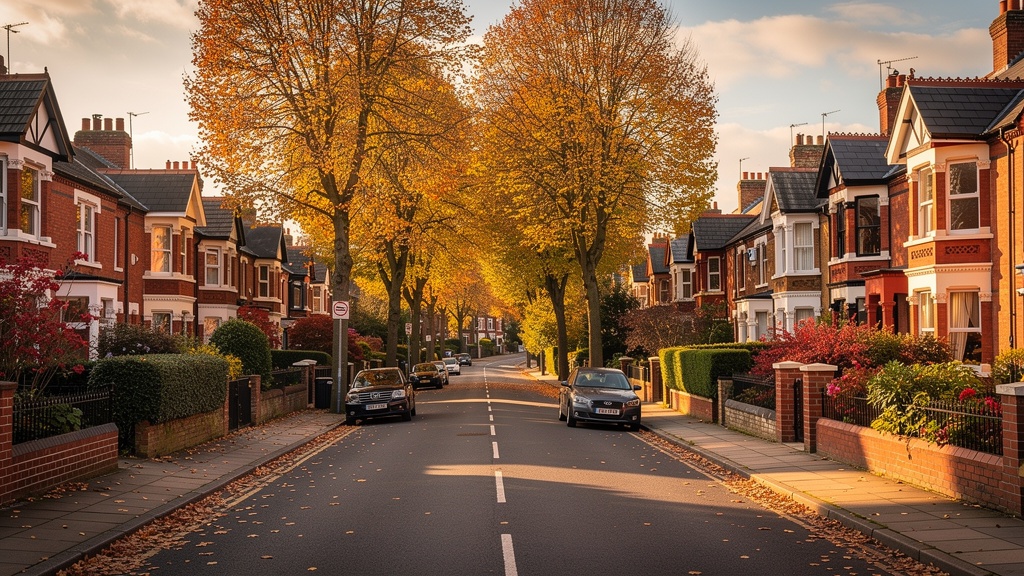
Wolverhampton is full of Victorian property — and we love it. Those solid brick terraces in Whitmore Reans, the bay-windowed semis of Penn, the double-fronted villas of Tettenhall. They were built to last. Most have lasted very well indeed. But they were also built 130 to 150 years ago, and that age shows up in a building survey in very predictable ways.
After conducting thousands of surveys on Victorian properties across Wolverhampton and the wider West Midlands, I can almost tell you what I'll find before I open the front door. Not because every Victorian house is the same — they aren't — but because the same issues come up time and time again, rooted in how these homes were built and how they've been maintained (or not) over a century and more.
This guide runs through the nine most common defects we find in Victorian properties across Wolverhampton — what causes them, what they mean, and what they typically cost to put right.
In This Guide
- Rising Damp and Failed DPC
- Chimney Stack Problems
- Roof Defects
- Timber Defects and Woodworm
- Drainage and Drainage Problems
- Structural Movement and Settlement
- Lead Plumbing and Outdated Services
- Single-Glazed Windows and Draught Gaps
- Extensions and Alterations Without Consent
- FAQs About Victorian Property Surveys
1. Rising Damp and Failed Damp Proof Course
Rising damp is the single most common issue we find in Victorian properties in Wolverhampton. The original damp proof courses (DPCs) in Victorian terraces were typically made from slate, blue engineering brick, or bitumen — materials that can degrade or fail over a century of use.
When the DPC fails, moisture from the ground rises up through the masonry. You'll often notice it as a distinctive tide-mark on internal walls, usually 1 to 1.2 metres above floor level. The plaster may be damp to touch, powdery, or show salt crystallisation (efflorescence). There might be a musty smell. Wallpaper may be lifting at the bottom.
Important distinction: Many properties are misdiagnosed with rising damp when the real culprit is penetrating damp from defective pointing, gutters, or roof coverings. We always investigate the cause thoroughly before recommending treatment — because the remedies are completely different.
A properly installed new chemical DPC costs around £2,000–£5,000 for a typical terrace, including replastering. Don't let anyone convince you that a £400 "injection job" alone will fix it without addressing the plaster — it won't.
2. Chimney Stack Problems
Victorian terraces typically have two or more chimney stacks — one serving the front rooms, one serving the rear. By the time we survey them, many are no longer in use (the fireplaces having been blocked up decades ago) but the stacks remain standing. This is where problems begin.
Unused stacks stop being maintained. Pointing degrades. Lead flashings at the base of the stack (where it meets the roof slope) crack and lift. Water gets in. We regularly find damp patches on bedroom ceilings directly below chimney stacks — water ingress that the owners have been blaming on something else entirely.
The other issue is structural: a chimney breast that has been removed internally — which was common in the 1960s and 70s — without a proper padstone and support installed at the floor above. This leaves the upper section of the chimney stack literally hanging in mid-air, supported only by the roof structure. We see this more often than you might think.
Budget for: Minor chimney repointing, £500–£1,200. Full chimney rebuild, £2,500–£5,000. Structural investigation of removed chimney breast, £800–£2,000+.
3. Roof Defects — Slipped, Cracked, and Missing Slates
Victorian terraces in Wolverhampton were originally roofed with Welsh slate. It's a beautiful material and, when in good condition, highly durable. The problem is that many roofs have never been completely re-slated — instead, individual slates have been replaced piecemeal over the decades, often with concrete tiles that are heavier than the original slate and can stress the roof structure.
We look for several things on every roof we survey: slipped or missing slates, cracked ridge tiles, deteriorated mortar (the "bedding" that holds ridge and hip tiles in place), failed lead valleys and flashings, and the condition of the roof structure itself — particularly the rafters, purlins, and timber wall plates.
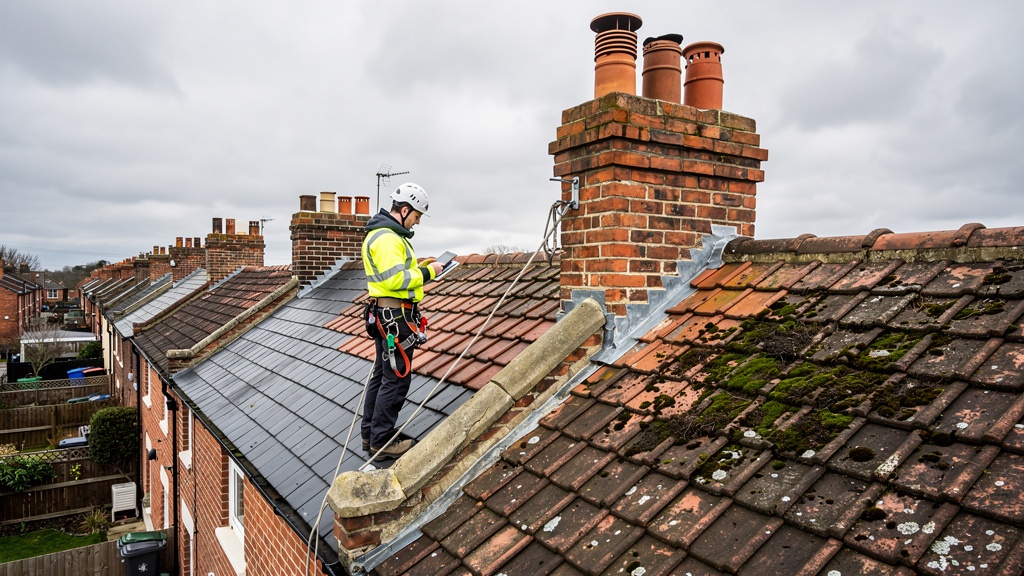
A partial re-slate (20–30% of the roof) typically costs £2,000–£4,000. A full re-slate on a typical Victorian terrace is £8,000–£15,000. This is often the largest single cost item in a Victorian property survey, and it's one buyers are frequently surprised by.
4. Timber Defects — Woodworm, Wet Rot, and Dry Rot
Victorian floor structures are entirely timber: joists, floorboards, the lot. They've been there for 130 years. In a well-maintained, properly ventilated property, that timber can be perfectly sound. But in properties where underfloor ventilation has been blocked (often by well-meaning homeowners who wanted to stop draughts), or where there's been a history of dampness, things can go badly wrong.
The most serious condition is dry rot (Serpula lacrymans). Despite the name, dry rot is caused by damp timber — but once established, it can spread through masonry and destroy timber far from the original damp source. We've seen dry rot in floor joists, in staircase timbers, in window frames. It looks like a grey-white fungal growth with a distinctive mushroom-like smell. Treatment is expensive: containing and removing dry rot in a typical Victorian terrace can cost £5,000–£20,000 depending on how far it's spread.
Woodworm (the larvae of wood-boring beetles) is far more common and generally less serious. Most woodworm infestations we find are historic — the beetles have long since gone — and require no treatment. But active infestations need addressing. Look for fresh, bright exit holes with fine dust around them.
5. Drainage Issues — Collapsed and Root-Damaged Pipes
Victorian drainage systems were typically built with salt-glazed ceramic pipes laid in sections. After 130 years, the joints between sections can crack and separate. Tree roots — particularly from large Victorian-era trees — find these gaps and grow into the pipe, eventually blocking it completely.
We recommend a CCTV drain survey on any Victorian property before purchase. It costs around £150–£300 and can reveal problems that would otherwise only surface (literally) after you've moved in. We've seen buyers save thousands by negotiating down the purchase price after a drain survey revealed cracked or collapsed sections requiring excavation and relining.
Did you know? In many Victorian terraces in Wolverhampton, the drainage runs under the building itself. A collapsed section beneath the foundations can cause significant subsidence — which is why drainage problems and structural movement sometimes occur together.
6. Structural Movement and Settlement
Some degree of movement in a Victorian terrace is normal. These buildings have been settling since the 1880s. The question is always: is the movement historic and stable, or is it active and ongoing?
We look at crack patterns, door and window alignments, and floor levels. We note whether cracks appear to be old and filled multiple times (suggesting movement that happened decades ago and has since stopped) or fresh and clean-edged (suggesting recent movement). Where we're uncertain, we always recommend monitoring or a specialist structural engineer's report before proceeding.
The most common causes of structural movement in Wolverhampton Victorian properties are: differential settlement in the original foundations, tree root activity, and — as mentioned above — failed drainage beneath the building. See our full article on cracks in walls for a detailed breakdown.
7. Lead Plumbing and Outdated Electrical Wiring
Many Victorian properties still have sections of original lead supply pipework — particularly the rising main from the external stop cock to the internal stop valve. Lead pipe is a health concern and should be replaced. Water companies in the West Midlands have replacement programmes, but they only cover pipework up to the boundary. Pipework inside the property is the homeowner's responsibility.
Electrical systems are equally important to check. Pre-1960s wiring — rubber-insulated or lead-sheathed cables — is brittle, potentially dangerous, and won't meet modern standards. A full rewire of a Victorian terrace costs £4,000–£8,000. We always recommend an EICR (Electrical Installation Condition Report) from a qualified electrician before exchange of contracts.
8. Single-Glazed Windows and Significant Heat Loss
Original Victorian sash windows are architecturally beautiful and, interestingly, repairable. But they leak heat and draughts in a way that modern windows don't. Many buyers ask whether they need to replace them immediately. Our honest answer: not necessarily, but expect high heating bills until you do.
If the property is in a conservation area (parts of Tettenhall, Merridale, and the city centre fall within Wolverhampton's conservation areas), replacing windows with uPVC may not be permitted. Secondary glazing is an effective alternative that retains the character of original sash windows while significantly improving thermal performance.
9. Extensions and Alterations — Consents and Quality
Almost every Victorian terrace we survey has been altered at some point. Common additions include rear single-storey extensions, dormer windows to the loft, removed chimney breasts, and replaced kitchens and bathrooms. The question is always: were the alterations done properly, and with the appropriate planning permission and building regulations consent?
We regularly find extensions built without Building Regulations approval — particularly those constructed before 1985, when permitted development rules were different. Your solicitor should check for certificates of completion or lawful development certificates. If none exist for an older extension, Indemnity Insurance is usually available, but it's something to be aware of.
Key Takeaways
- ✅ Victorian properties in Wolverhampton almost always need a Level 3 Building Survey — not a Level 2
- ✅ Rising damp, chimney problems, and roof defects are the three most common findings
- ✅ Always commission a CCTV drain survey alongside your building survey on any Victorian property
- ✅ Dry rot is rare but expensive — look for musty smells and soft floor areas during viewings
- ✅ Check the status of any extensions or alterations with your solicitor before exchange
- ✅ Many defects are negotiating tools, not deal-breakers — a good survey gives you the information to act
Frequently Asked Questions About Victorian Property Surveys
In most cases, yes. A RICS Level 2 HomeBuyer Report is designed for conventional properties in reasonable condition. Victorian properties in Wolverhampton — typically 120–150 years old — have had a long time to accumulate defects, alterations, and maintenance issues. A Level 3 Building Survey covers the property in far more depth, including the construction method, materials, and all visible defects. For a property of this age, the extra detail and reassurance is almost always worth the additional cost.
A RICS Level 3 Building Survey on a Victorian terrace in Wolverhampton typically costs from £550–£750, depending on the size of the property. For larger Victorian semis or detached houses, the cost may be higher. This compares extremely favourably against the cost of the repairs you might discover — or, worse, fail to discover — without one. Add a CCTV drain survey (around £150–£300) and you have a comprehensive picture of what you're buying.
Rising damp affects lower walls and typically shows as a tide mark, salt deposits, and damaged plaster near the base of walls. It's caused by ground moisture rising through masonry where the damp proof course has failed. Condensation, by contrast, affects surfaces throughout the property — particularly cold surfaces like external walls and window reveals — and is caused by warm, moist air hitting cold surfaces. The remedies are completely different: rising damp requires DPC treatment; condensation requires improved ventilation and heating. We always test properly before recommending treatment.
Not necessarily. Almost all Victorian properties show some signs of historical movement — slight unevenness in floors, hairline cracks in plaster, slightly out-of-square door frames. The key question is whether movement is historic and stable (which is generally not a concern) or active and ongoing (which requires investigation). Our surveyors are experienced in distinguishing between the two, and we'll always tell you clearly which situation applies and what, if anything, you should do about it.
Many internal works don't require planning permission — rewiring, replastering, fitting a new kitchen or bathroom, for example. However, external alterations (new windows, extensions, roof dormers, cladding) typically require planning permission, and works to any property in a conservation area are subject to additional controls. Building Regulations approval is separate from planning and is required for structural works, new drainage, extensions, and electrical rewiring. Always check with Wolverhampton City Council's planning department before starting any external alterations.
It depends entirely on condition, but as a general guide, a Victorian terrace in average condition (not recently renovated) might need £10,000–£30,000 of work to bring it fully up to standard — covering items like partial roof works, chimney repairs, DPC treatment, updated electrics, and new central heating. A property that hasn't been updated since the 1970s might need significantly more. Our survey report gives you itemised condition ratings so you can prioritise works and budget accordingly before you commit to the purchase.
So, Should You Buy a Victorian Property in Wolverhampton?
Absolutely — but go in with your eyes open. Victorian properties are characterful, well-built, and often represent excellent value in Wolverhampton. Many of the defects we find are entirely manageable and give you leverage to negotiate a fair price. What you want to avoid is buying blindly, only to discover the full picture after you've moved in.
A thorough building survey is the single best thing you can do before committing to a Victorian property purchase. It transforms unknowns into knowns — and knowns into either a negotiated price reduction, a planned repair programme, or, occasionally, a decision to walk away from a property that isn't right.
If you're considering a Victorian property in Wolverhampton or the wider West Midlands, we'd love to help. Get in touch for a free, no-obligation quote — we'll advise on the right survey type for your specific property before you even book.